
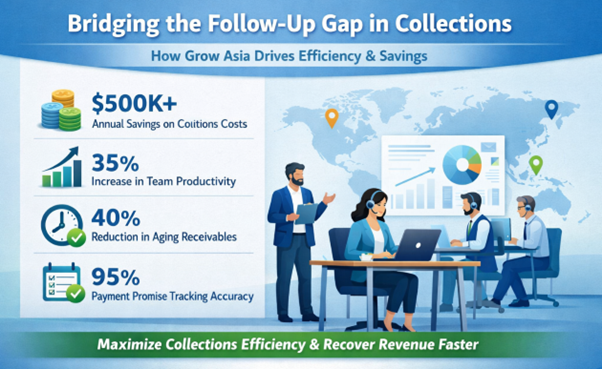
In receivables and collections management, most organizations focus heavily on the first reminder or first contact with a customer. However, the real breakdown often happens after that initial interaction.
Missed reminders, untracked payment promises, and inconsistent CRM updates can quietly slow down collections. Over time, these small gaps lead to aging receivables, delayed cash flow, and unnecessary write-offs.
For companies managing large volumes of invoices or global customers, maintaining disciplined follow-ups can be difficult. Internal finance teams are often balancing multiple responsibilities, which means follow-up activities sometimes become inconsistent or delayed.
📉 Studies in receivables management show that up to 40–50% of delayed payments occur simply due to inconsistent follow-ups rather than actual customer disputes or inability to pay.
⚠️ Why Follow-Ups Often Break Down
Even well-structured teams face operational challenges when it comes to managing follow-ups effectively.
📑 High Invoice Volumes
When hundreds or thousands of invoices are open at any given time, tracking every reminder and payment commitment manually becomes difficult.
Without structured tracking, AR teams may spend 20–30% of their time manually monitoring payment statuses rather than resolving issues that drive collections.
⏳ Broken Promises to Pay
Customers frequently commit to payment dates but may miss those timelines. Without proper monitoring, these broken commitments can go unnoticed, causing further delays.
Industry analysis shows that over 35% of promised payment dates are missed, requiring structured re-engagement.
💻 Manual CRM Tracking
If follow-ups and customer interactions are not consistently documented in CRM systems, teams lose visibility into the status of accounts.
This lack of documentation can reduce collections efficiency by 15–25% due to duplicated effort and missed follow-ups.
🌍 Global Time Zone Gaps
Organizations dealing with international clients often struggle to maintain consistent communication across different working hours.
Delayed responses due to time zone gaps can add 3–7 additional days to payment cycles.
These operational gaps don’t always appear critical at first, but over time they significantly affect collections efficiency and working capital management.
🚀 How Grow Asia Helps
This is where Grow Asia helps organizations bring structure and discipline to follow-up processes without increasing the workload on internal teams.
Grow Asia’s offshore support teams act as an operational extension of finance and collections departments, ensuring that no reminder, commitment, or follow-up is missed.
🔔 Structured Payment Reminder Cycles
Grow Asia teams manage scheduled reminder workflows, including:
- Pre-due date payment reminders
• Due date confirmations
• Follow-ups on overdue invoices
• Escalation reminders when payments are delayed
Organizations that implement structured reminder cycles typically see:
📈 15–25% improvement in on-time payments
📉 20–30% reduction in invoice aging
Timely communication significantly improves the likelihood of faster payment.
📅 Monitoring Broken Payment Promises
One of the most common gaps in collections occurs when customers promise to pay but fail to follow through.
Grow Asia teams help track:
- Promised payment dates
• Partial payment commitments
• Missed payment deadlines
When commitments are not met, structured follow-ups are triggered immediately, preventing accounts from slipping further into aging cycles.
Companies that actively track payment commitments can reduce broken promise delays by up to 30–40%.
🗂️ Accurate CRM Documentation
Maintaining clear documentation is essential for transparency and coordination between teams.
Grow Asia supports organizations by ensuring that:
- All customer communications are logged
• Payment commitments are recorded
• Dispute updates are documented
• Escalation histories are maintained
With structured CRM documentation, organizations often achieve:
📊 25–35% improvement in account visibility
⚡ 20% faster resolution of disputes and payment delays
🛡️ Compliance-Safe Follow-Ups
Organizations often worry that outsourcing follow-ups may increase compliance risks. Grow Asia addresses this by operating within defined communication protocols and structured workflows.
Using standardized templates, approved escalation paths, and controlled CRM access, Grow Asia ensures that follow-ups remain consistent, professional, and compliant with organizational policies.
📈 The Impact of Strong Follow-Up Discipline
When follow-up processes are structured and consistent, organizations often experience:
🚀 20–35% faster payment recovery
⚙️ 30–40% improvement in collections productivity
📉 15–25% reduction in receivables aging
🕒 Up to 40% reduction in manual follow-up workload for internal teams
Most importantly, businesses ensure that earned revenue is collected efficiently rather than being delayed due to operational gaps.

Related items

In today’s dynamic business landscape, companies harness offshoring to unlock global talen
In today’s dynamic world, Record to Report is a key part of the financial management and r